7132 State Rt 3, Westerville Ohio 43082


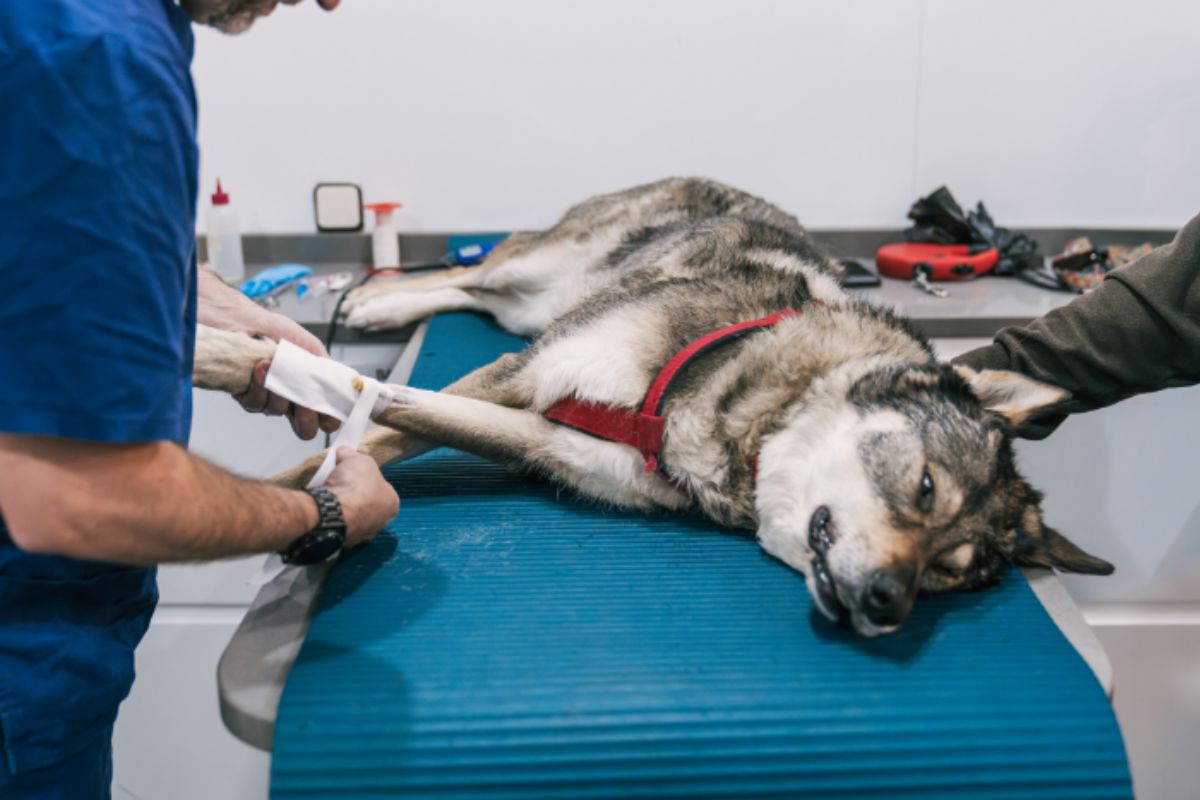
If your dog is suddenly limping, showing signs of pain, or struggling to move normally, you may wonder if a torn ligament is to blame. One of the first diagnostic tools a veterinarian may recommend is an X-ray. But here’s the big question many pet owners ask: Will an X-ray show a torn ligament in a dog? The short answer is—not directly. Let’s explore why.
What X-Rays Show
An X-ray (radiograph) is a powerful tool that creates images of the bones and some surrounding structures. It’s excellent for detecting:
- Fractures and bone breaks
- Joint abnormalities
- Dislocations
- Signs of arthritis or bone infection
- Bone tumors or growths
However, ligaments—which are soft tissues—do not show up clearly on X-rays. Ligaments, tendons, muscles, and cartilage appear faint or not at all because X-rays are best at capturing dense structures like bone
So, How Can an X-ray help diagnose a Torn Ligament?
Even though X-rays can’t directly display a torn ligament, they’re still incredibly helpful in the diagnostic process. Here’s how:
1. Ruling Out Other Issues
X-rays help eliminate other possible causes of your dog’s symptoms, such as fractures, bone tumors, or severe arthritis. This helps narrow down the cause of lameness or pain to soft tissue, including ligaments.
2. Detecting Secondary Changes
Over time, a torn ligament—especially a cranial cruciate ligament (CCL) in the knee—can cause visible changes in the joint. These may include:
- Fluid buildup (joint effusion)
- Bone spurs
- Shifts in joint alignment
- Signs of early arthritis
These indirect signs can point to a ligament injury even if the ligament itself isn’t visible.
3. Performing Stress Views
In some cases, the veterinarian may perform special X-ray views called “stress views.” This involves gently manipulating the joint while taking the X-ray to see if there’s abnormal movement. Excessive motion or instability may indicate a torn ligament.
What Imaging Does Show Ligament Tears?
To get a clear look at soft tissue injuries like ligament tears, more advanced imaging is needed:
MRI (Magnetic Resonance Imaging)
MRI provides detailed images of soft tissues, including ligaments, tendons, and cartilage. It’s the gold standard for diagnosing ligament injuries, but it is expensive and not always readily available.
Ultrasound
Some veterinarians use ultrasound to assess certain ligament or tendon injuries. It’s non-invasive and quicker than an MRI, but its effectiveness can depend on the location and size of the ligament.
How Vets Diagnose Ligament Tears Without Imaging
In many cases, veterinarians can diagnose a torn ligament—especially a torn CCL—through a combination of:
- Physical examination (checking for pain, instability, or swelling)
- Palpation tests (like the “drawer test” or “tibial thrust” test for knee instability)
- X-rays to rule out other issues or detect joint changes
Based on your dog’s breed, activity level, and symptoms, your vet may make a confident diagnosis without needing an MRI.
When to See a Vet
If your dog is limping, showing signs of pain, or avoiding putting weight on a limb, it’s time to consider professional vet service. The earlier a ligament injury is diagnosed, the better the chances of a full recovery, especially if surgery or physical therapy is needed.
So, will an X-ray show a torn ligament in a dog? Not directly, but that doesn’t mean it’s useless. X-rays play a crucial role in ruling out other conditions and pointing to ligament damage through indirect signs. If a torn ligament is suspected, your vet will guide you through the best next steps for diagnosis and treatment.