7132 State Rt 3, Westerville Ohio 43082


When your dog suddenly starts limping, avoids putting weight on a back leg, or struggles to stand after resting, a knee ligament injury could be responsible. One common cause of hind leg lameness is a cranial cruciate ligament (CCL) tear, often called a dog ACL tear.
This injury can affect dogs of different breeds, sizes, and ages. Some dogs experience sudden ligament damage during physical activity, while others develop the condition gradually.
At our veterinary practice in Westerville, we understand how concerning it can be to watch your dog struggle with everyday movements. Our vets can evaluate the symptoms, identify potential causes, and recommend appropriate treatment options, which may include veterinary surgery if needed. Recognizing the warning signs early can help protect their mobility and long-term joint health.
What Is an ACL Tear in Dogs?
A dog ACL tear occurs when the cranial cruciate ligament inside the knee becomes partially or completely damaged. This ligament connects the thighbone and shinbone, helping stabilize the knee during movement.
Although commonly called the ACL, veterinarians refer to this structure as the cranial cruciate ligament (CCL). When the ligament tears, the knee becomes unstable, causing pain, inflammation, and difficulty walking.
Two common types of injuries include:
- Acute tears: Sudden ligament damage caused by twisting, jumping, or awkward movements.
- Degenerative tears: Gradual ligament weakening that eventually leads to partial or complete rupture.
Without appropriate treatment, knee instability can contribute to arthritis and meniscal injuries.
What Are the Signs of an ACL Tear in Dogs?
The symptoms of a torn knee ligament vary depending on the severity of the injury.
Sudden Limping
Your dog may suddenly limp or avoid putting weight on one hind leg, especially after running or playing.
Difficulty Standing or Sitting
Dogs with knee injuries may struggle to stand after resting. Some sit with the injured leg extended outward.
Reduced Physical Activity
Your dog may become reluctant to run, jump, climb stairs, or participate in familiar activities.
Swelling Around the Knee
Inflammation may cause visible swelling or tenderness around the affected joint.
Stiffness After Resting
Some dogs experience stiffness after sleeping or resting. Their movement may improve slightly after walking.
Muscle Weakness
Prolonged avoidance of the injured leg can cause muscle loss, making one hind leg appear thinner.
When should you contact a veterinarian? Persistent limping, knee swelling, or difficulty bearing weight warrants veterinary attention. Severe pain or an inability to walk requires prompt assessment.
What Causes ACL Tears in Dogs?
Many canine CCL injuries develop because the ligament gradually weakens rather than tearing during a single accident.
Several factors can increase the risk:
- Excess weight: Additional body weight increases pressure on knee joints.
- Breed predisposition: Labrador Retrievers, Rottweilers, and Newfoundlands have increased susceptibility.
- Age: Ligaments may weaken through progressive degeneration.
- Sudden movements: Sharp turns, jumping, or awkward landings can damage weakened ligaments.
- Joint structure: Certain anatomical characteristics can contribute to instability.
Dogs that tear one CCL also face an increased risk of injuring the opposite knee.
How Do Veterinarians Diagnose a Dog ACL Tear?
Diagnosing a CCL injury involves examining your dog’s knee, evaluating symptoms, and performing appropriate diagnostic tests.
Physical Examination
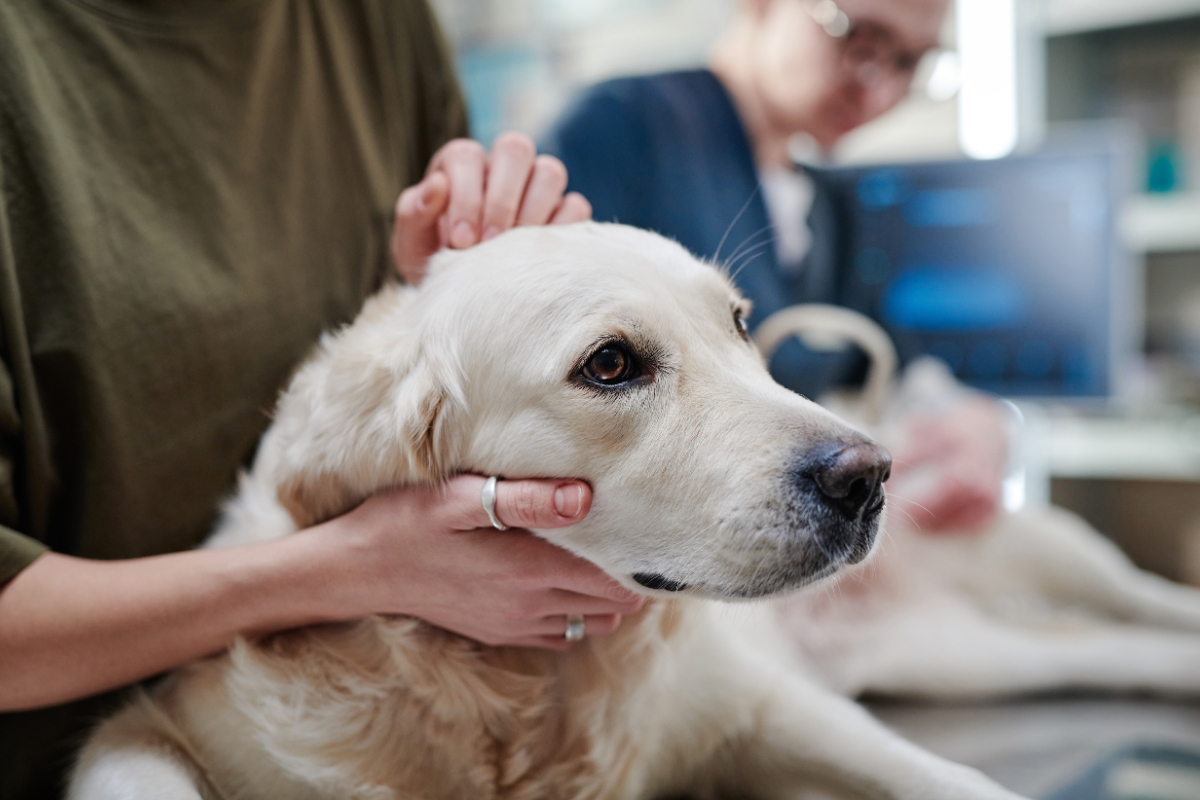
Our vets assess your dog’s walking pattern, knee swelling, pain, and joint stability.
Common orthopedic tests include:
- Cranial drawer test: Checks for abnormal forward movement of the shinbone relative to the thighbone.
- Tibial compression test: Evaluates instability during movements that simulate weight-bearing.
Some dogs require sedation to allow a thorough examination without excessive discomfort.
X-Rays and Diagnostic Imaging
Although X-rays cannot directly show a torn CCL, they can reveal joint swelling, arthritis, and other abnormalities. Additional testing may be recommended when the diagnosis remains uncertain or another injury is suspected. Our veterinary practice uses examination findings to explain your dog’s condition and determine appropriate next steps.
What Are the Treatment Options for a Dog ACL Tear?
Treatment depends on your dog’s size, age, activity level, overall health, and severity of knee instability.
Nonsurgical Treatment
Conservative management may be appropriate for certain smaller or less active dogs, particularly when surgery is not suitable.
Treatment may involve:
- Restricted physical activity
- Veterinarian-prescribed pain medication
- Weight management
- Physical rehabilitation
- Controlled leash walks
Nonsurgical treatment does not repair the torn ligament. Some dogs continue experiencing knee instability despite supportive care.
Surgical Treatment
For many dogs, particularly larger or active breeds, surgery can provide more reliable knee stabilization.
Common procedures include:
- Tibial Plateau Leveling Osteotomy (TPLO): Changes the angle of the tibia to reduce abnormal knee movement during weight-bearing.
- Tibial Tuberosity Advancement (TTA): Repositions part of the shinbone to improve knee stability.
- Extracapsular Lateral Suture Stabilization: Uses a strong suture outside the joint to limit abnormal movement.
Each procedure has different benefits, limitations, and recovery requirements.
If your dog may need veterinary surgery, our vets can evaluate the injury, discuss treatment considerations, and determine whether an orthopedic referral is appropriate.
How Long Does Recovery Take After Dog ACL Surgery?
Recovery typically takes several months. Many dogs require approximately 8–12 weeks of restricted activity, followed by additional strengthening and rehabilitation.
The timeline varies depending on the surgical procedure and individual healing progress.
What Should You Expect During Recovery?
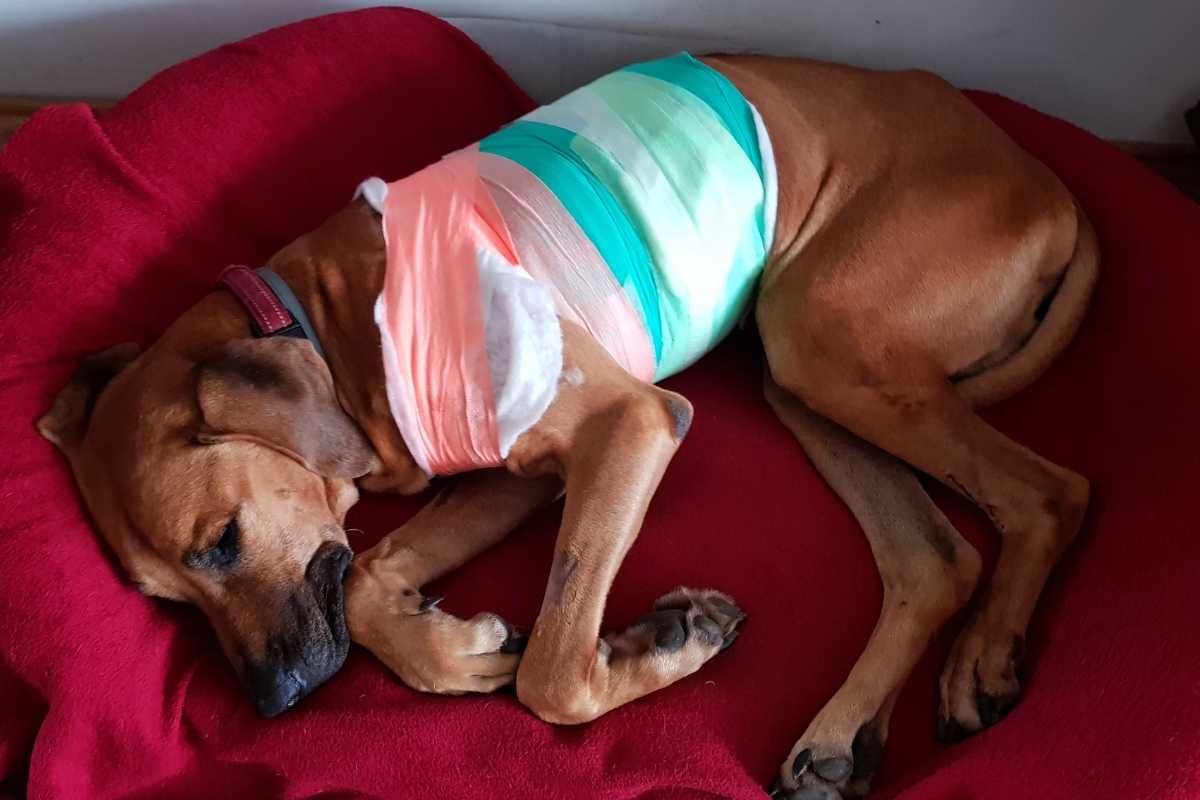
- First two weeks: Incision care, pain management, and restricted movement.
- Weeks three through six: Controlled leash walks and rehabilitation as directed.
- Weeks seven through twelve: Gradually increased activity following veterinary reassessment.
- Following months: Continued strengthening and a supervised return to normal exercise.
How Can You Support Recovery at Home?
- Prevent running, jumping, and rough play.
- Place nonslip rugs on slippery floors.
- Administer prescribed medications correctly.
- Monitor the surgical incision.
- Attend scheduled follow-up appointments.
- Follow rehabilitation instructions.
Contact our veterinarian if your dog develops worsening pain, significant swelling, incision discharge, or sudden difficulty walking.
Can a Dog ACL Tear Heal Without Surgery?
A completely torn CCL generally cannot return to its original strength and function without surgical stabilization. Some dogs improve with rest, medication, rehabilitation, and weight management. However, knee instability may persist.
Smaller dogs with lower activity demands sometimes achieve acceptable mobility through conservative treatment. Larger or more active dogs frequently benefit from surgical intervention. Persistent instability can contribute to arthritis, meniscal damage, and chronic discomfort. A veterinary examination helps determine which approach is appropriate.
Can ACL Tears in Dogs Be Prevented?
Not every CCL injury can be prevented, especially when genetics or ligament degeneration contribute to the condition.
However, several habits may support joint health:
- Maintain a healthy body weight.
- Encourage regular, controlled exercise.
- Avoid sudden increases in strenuous activity.
- Support muscle strength through appropriate conditioning.
- Address persistent limping promptly.
- Schedule veterinary examinations when mobility changes occur.
Early attention to joint discomfort can help identify problems before they become more severe.
Help Your Dog Get Back to Comfortable Movement
Watching your dog struggle to walk, climb stairs, or enjoy daily activities can be upsetting. A torn knee ligament can significantly affect mobility, but timely diagnosis and appropriate treatment can help improve comfort and function.
At our veterinary practice in Westerville, we help pet owners understand their dogs’ health concerns and make informed treatment decisions. Whether your dog has developed a sudden limp or ongoing knee discomfort, our vets can help identify the next steps.
Don’t wait for your dog’s mobility to worsen. Contact our veterinary practice today to schedule an examination and learn how we can help your dog move more comfortably.
Frequently Asked Questions
Q1. Can a Dog Still Walk With a Torn ACL?
Ans. Yes. Some dogs can walk despite having a partial or complete CCL tear. However, walking does not mean the knee is stable or pain-free. Veterinary evaluation is recommended.
Q2. Is a Torn ACL in Dogs an Emergency?
Ans. Not every CCL tear requires emergency treatment. However, severe pain, inability to bear weight, or an injury following significant trauma requires prompt veterinary attention.
Q3. What Happens if a Dog’s ACL Tear Goes Untreated?
Ans. Untreated knee instability may cause persistent discomfort, muscle loss, meniscal injuries, and progressive arthritis. Treatment helps manage these risks and improve mobility.
Q4. Where Can I Get My Dog Examined for an ACL Tear in Westerville?
Ans. At WestVets Maxtown Veterinary Clinic, our vets can examine your dog’s injured leg, assess knee stability, and recommend diagnostic testing when necessary.
Q5. Can WestVets Maxtown Veterinary Clinic Help Determine Whether My Dog Needs ACL Surgery?
Ans. Yes. Our veterinary team at WestVets Maxtown Veterinary Clinic can assess your dog’s condition and discuss conservative treatment, surgical considerations, or referral options based on the findings.
Q6. Where Can I Get Follow-Up Care for My Dog’s Knee Injury in Westerville?
Ans. WestVets Maxtown Veterinary Clinic can help evaluate your dog’s recovery progress, address mobility concerns, and recommend appropriate follow-up care or rehabilitation.